My Sister's Place
Resettlement lands 6 km (3.6 miles) north of Africa University, Old Mutare, Zimbabwe
April 30, 2012
Before she moved to her one-room apartment, Mrs. Gonye and her daughters had been living at her sister's place about half a kilometer away on the resettlement farm. Mrs. Gonye wanted to introduce us to her sister, show us her sister's house, and ask for assitance paying the school fees for her nephew. |
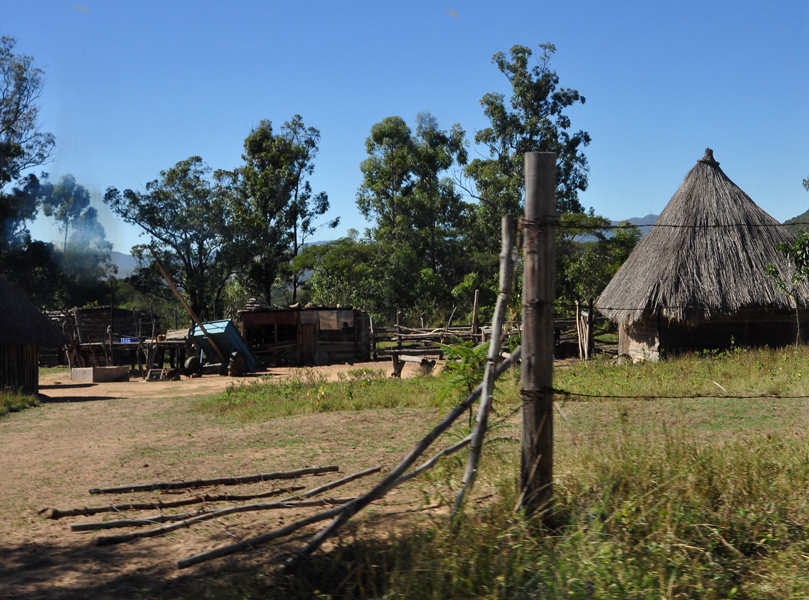
Along the way
Along the dirt path to the sister's house we had to wait for a small herd of ribby cattle to move aside. On either side of the path were the huts and kitchens of settlers who had claimed farm plots. They were growing maize and sweet potatoes. A few had cattle, an indication of relative wealth. |
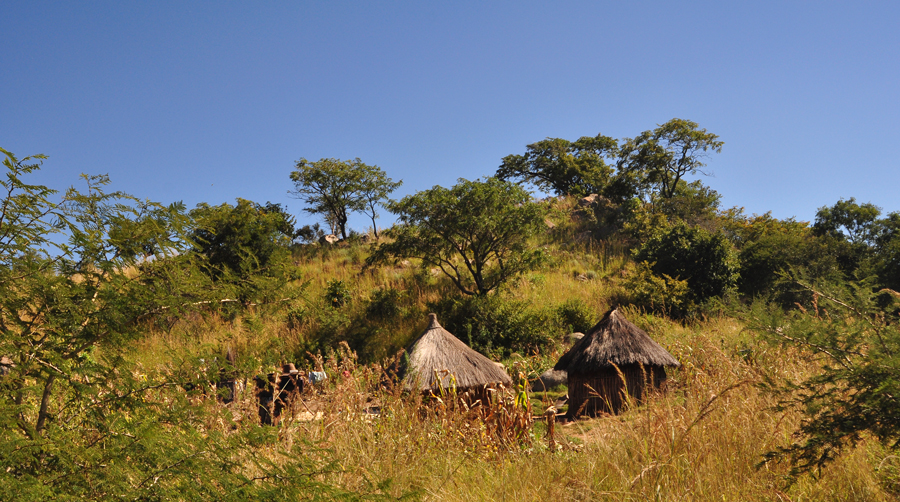
The Sister's Place
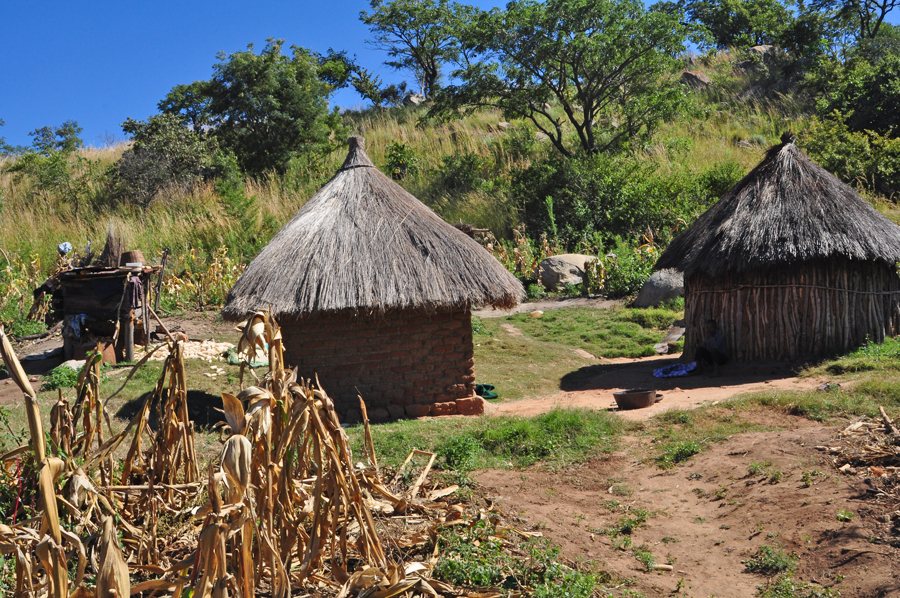
Three structures (left to right): Grain crib, the residence, and the kitchen.
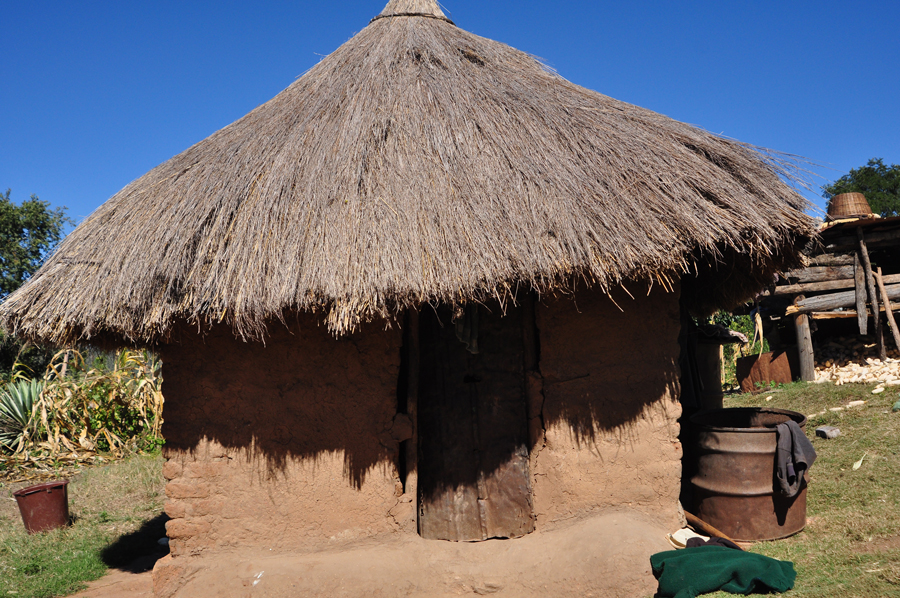
Home
This square brick windowless building is
the living room/bedroom for the sister's family.
|
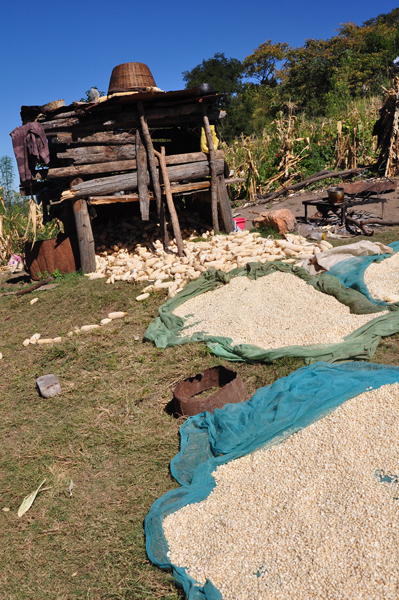
Drying maize
Zimbabweans grow maize with white kernels. When partially dried on the stalk, the ears are harvested and placed in a crib on stilts. Kernels are then stripped from the cob and laid on mats in the sun to complete the drying process. Thoroughly dried maize is taken to a mill to be ground into powder. Mills charge $1 to grind 20 kgs, enough to fill a smallish bag. Called mealie meal, this corn powder has a long shelf life if kept dry. Sadza, the staple food of Zimbabwe, is made by adding water to mealie meal and boiling it with constant stirring until it forms a thick paste with the consistency of mashed potatoes. Sadza is rolled into small balls with the fingers and eaten without a fork or spoon. Most Zimbabweans eat sadza twice a day. Beans and greens are the other staples. |
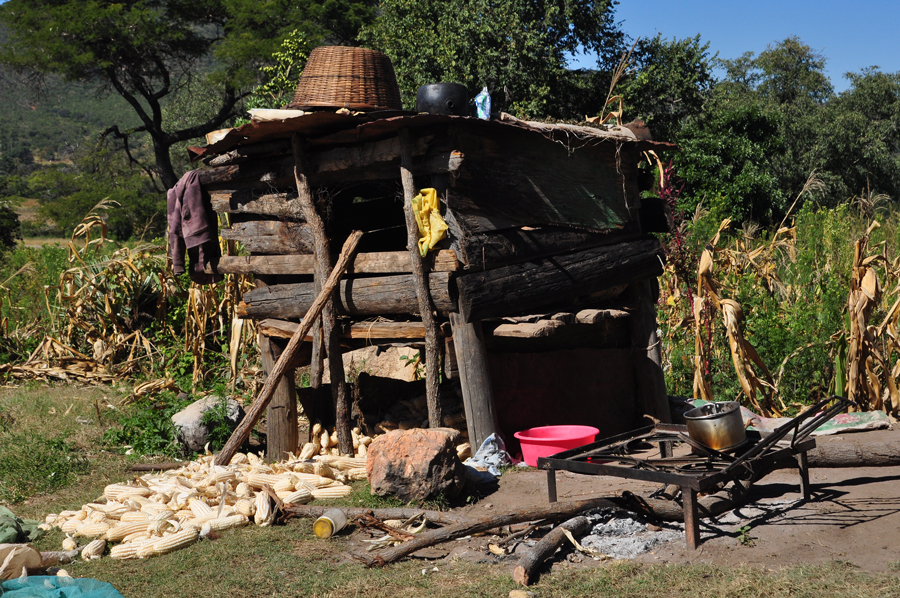
Zimbabweans in rural areas cook over wood fires.
Maize plots occupy much of the available flat ground. The climate of Zimbabwe is conducive to growing several crops of maize during the year. Farmers may have several fields planted at different times as a safeguard against droughts or excessive rains. A failed crop translates directly into hunger. It appears that Mrs. Gonye's sister's hard work in the fields has produced a good harvest of maize this season. |
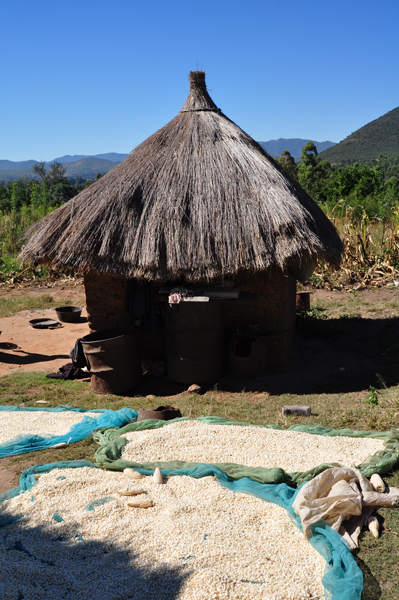
Good harvest
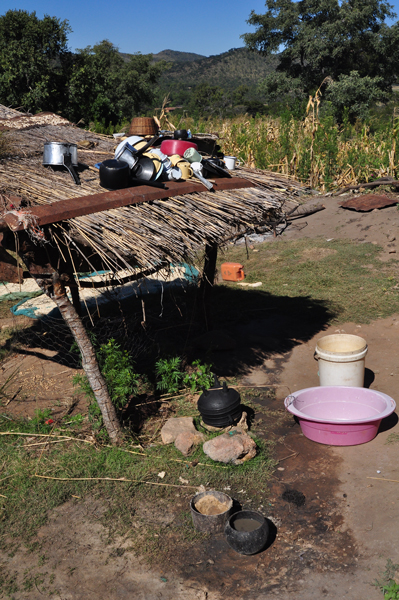
Outdoor kitchen
In good weather meals are prepared outside. The thick black kettle is used to boil mealie meal to make sadza. The pots of dirt and water in the foreground are used for scrubbing the cookware. The pink pan is for dishwashing.In wet weather, food is prepared in the round hut with the thatch roof which allows some of the smoke to escape while keeping the occupants dry. |
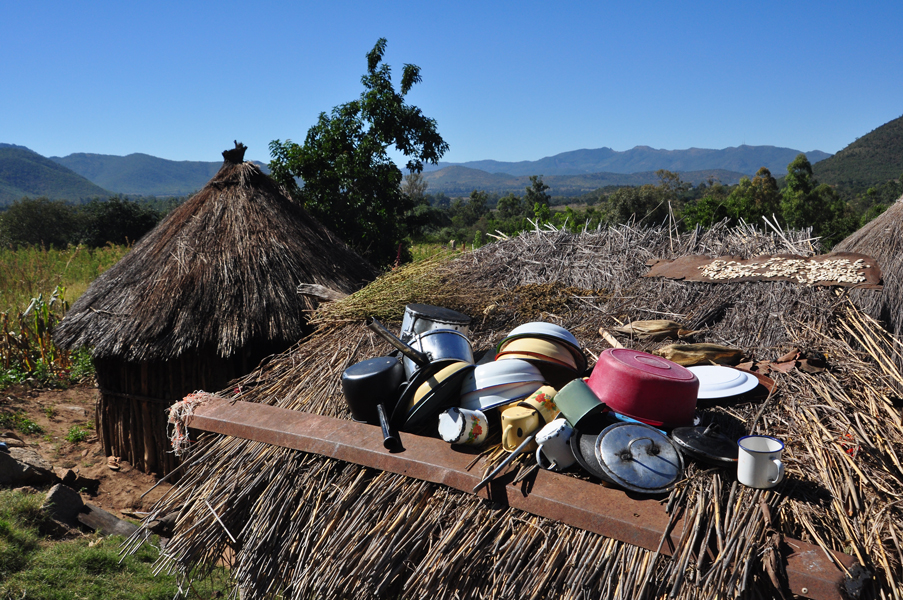
Next to godliness
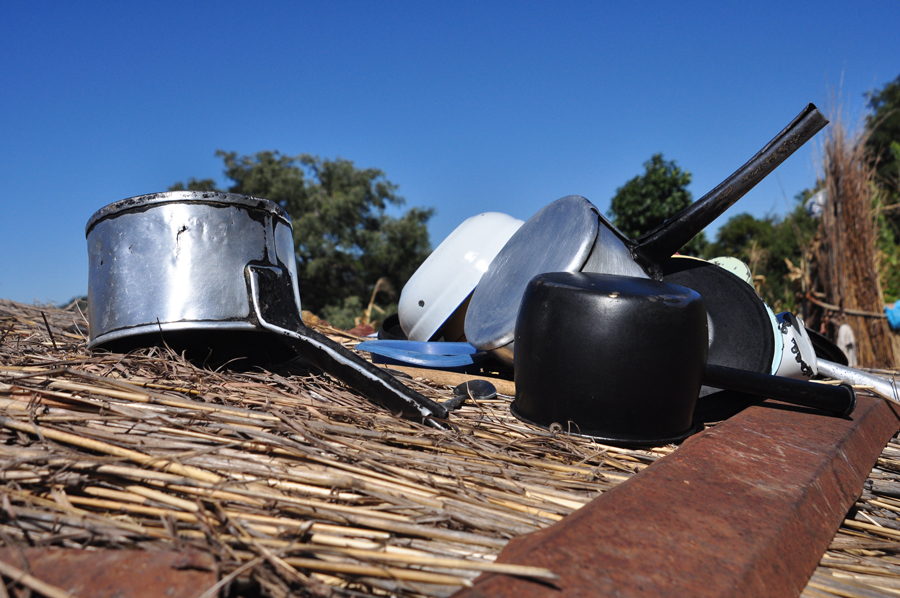
Ready to serve
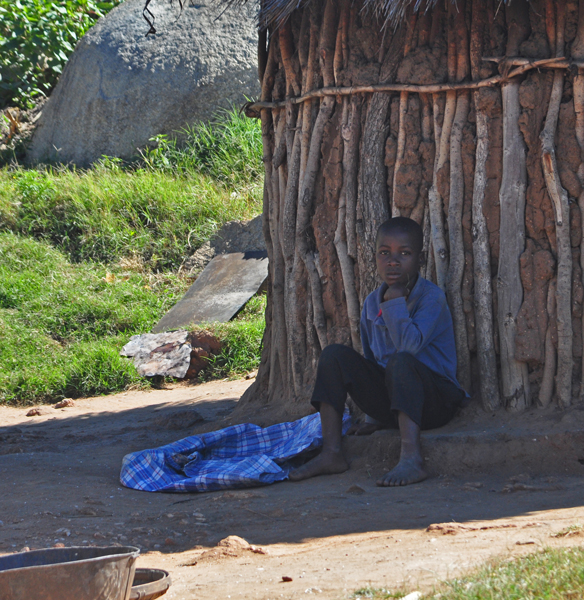
The nephew in the shade of the kitchen hut
Mrs. Gonye's sister was not at home so we never met her. While that encounter would have been informative, GR appreciated the unfettered opportunity to photograph this household. |
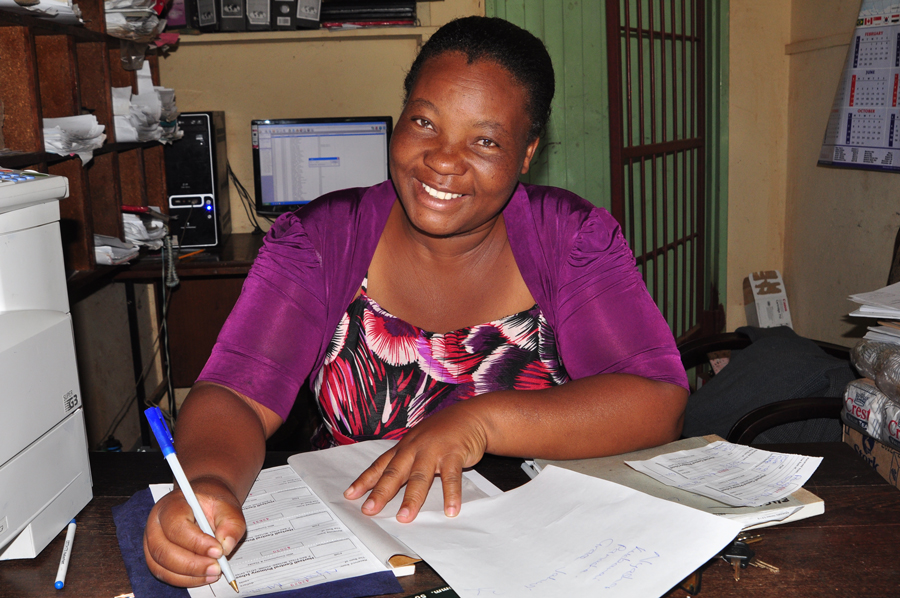
The Bursar
We drove directly from the sister's place to the Hartzell Central Primary School about 2 km away where the school fees for four children were paid to the bursar. |
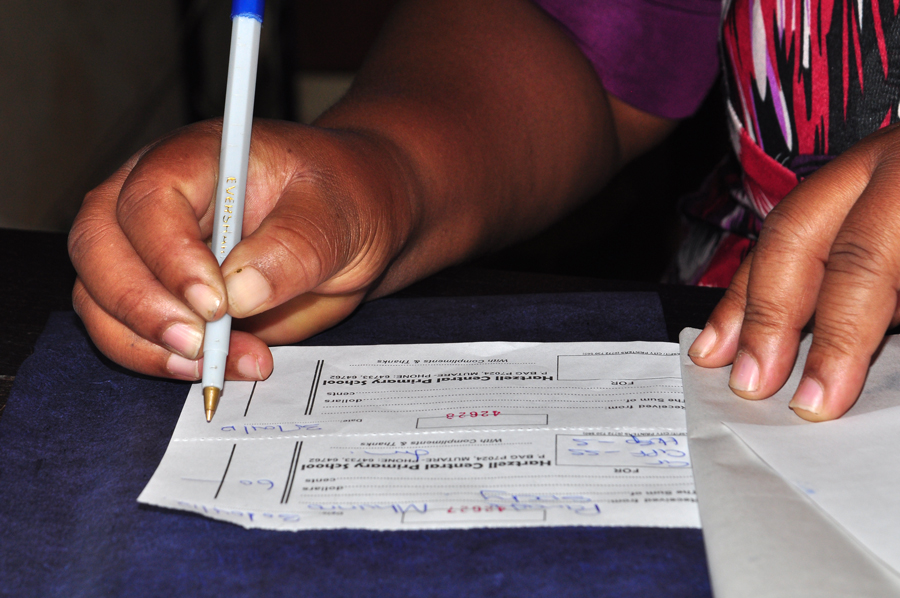
In Writing
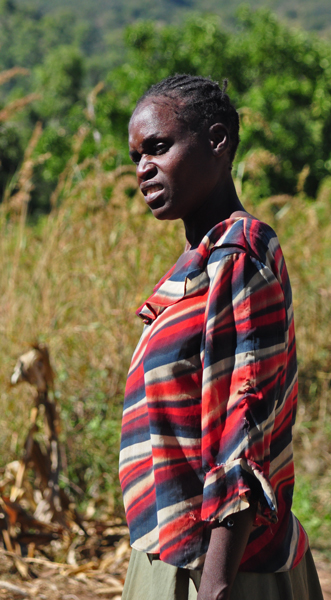
Shared concerns
With school fees for a semester secured for four children, perhaps Mrs. Gonye slept more contently in the blankets with her daughters on the floor of her hut. Perhaps. |
"For the poor shall never cease out of
the land: therefore I command thee, saying,
|
In choosing an alias for the family name, GR discovered that gonye is the Shona word for caterpillar. Can you speculate why this name is so appealling? |